
Ecosystems in Peril: Biodiversity in the Inland Empire
By Eliam Carrion Ramirez
Residents of Redlands, Calif. and the neighboring areas gathered in the Joe Gonzales Community Center on the evening of Mar. 18 to attend the Ecosystems in Peril panel, hosted by Accelerate Neighborhood Climate Action.
The organization was founded in Denver, Colo. in 2017, but is now established in Redlands. Their mission is to work at the local level, providing information on strategies and goals to guide participating neighborhoods in taking climate action.
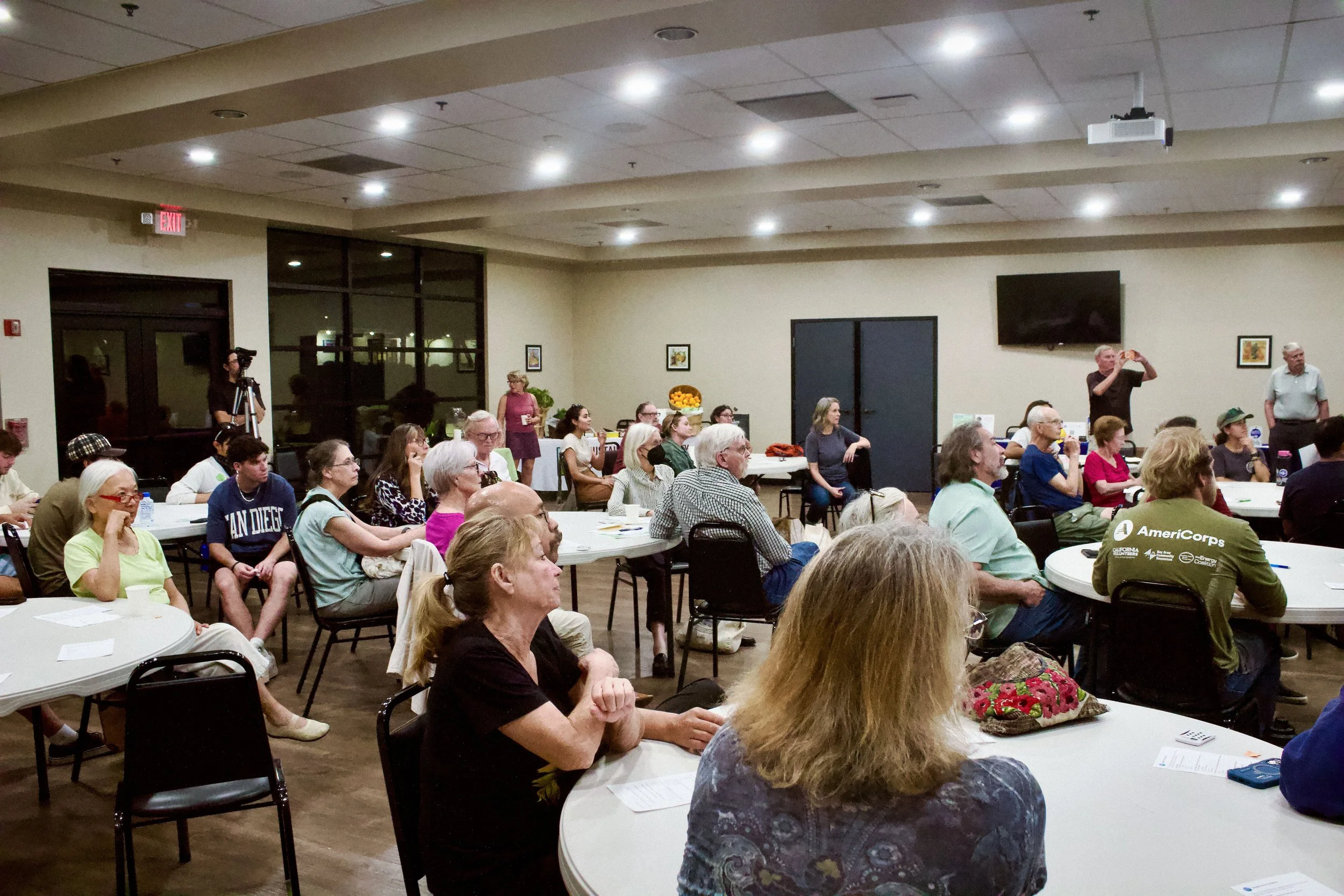
Image courtesy of Eliam Carrion Ramirez: Attendees listening to the panel.
Hillary Jenkins, an environmental studies professor from the University of Redlands and the moderator of the panel, started the event by asking the crowd questions on introductory level informational trivia.
Jenkins revealed that global wildlife populations have declined 73 percent since 1970, and freshwater wildlife is the most affected. She then highlighted the importance of the local meeting by reminding the audience that 35% of U.S. plants are found in California, and 45% of all mammals, birds and fish are as well.
The core message of Jenkins' statistics was that, “California is a biodiversity hotspot, but severely suffers from loss.”
The crowd’s reaction to the introduction signaled the bitter side of the story -- the lack of information known by the general public. After other detailed facts, the tone shifted to a sea of shock and confusion that fueled the level of engagement they would have for the rest of the meeting.
Jenkins then gave way to the panel discussion by introducing Brad Martin, another environmental studies professor from the University of Redlands, and Milan Mitrovich, the land resources manager at the San Bernardino Valley Water Conservation District. Martin and Mitrovich’s work is specialized in the study of plant ecology and the conservation of endangered species of the area, respectively.
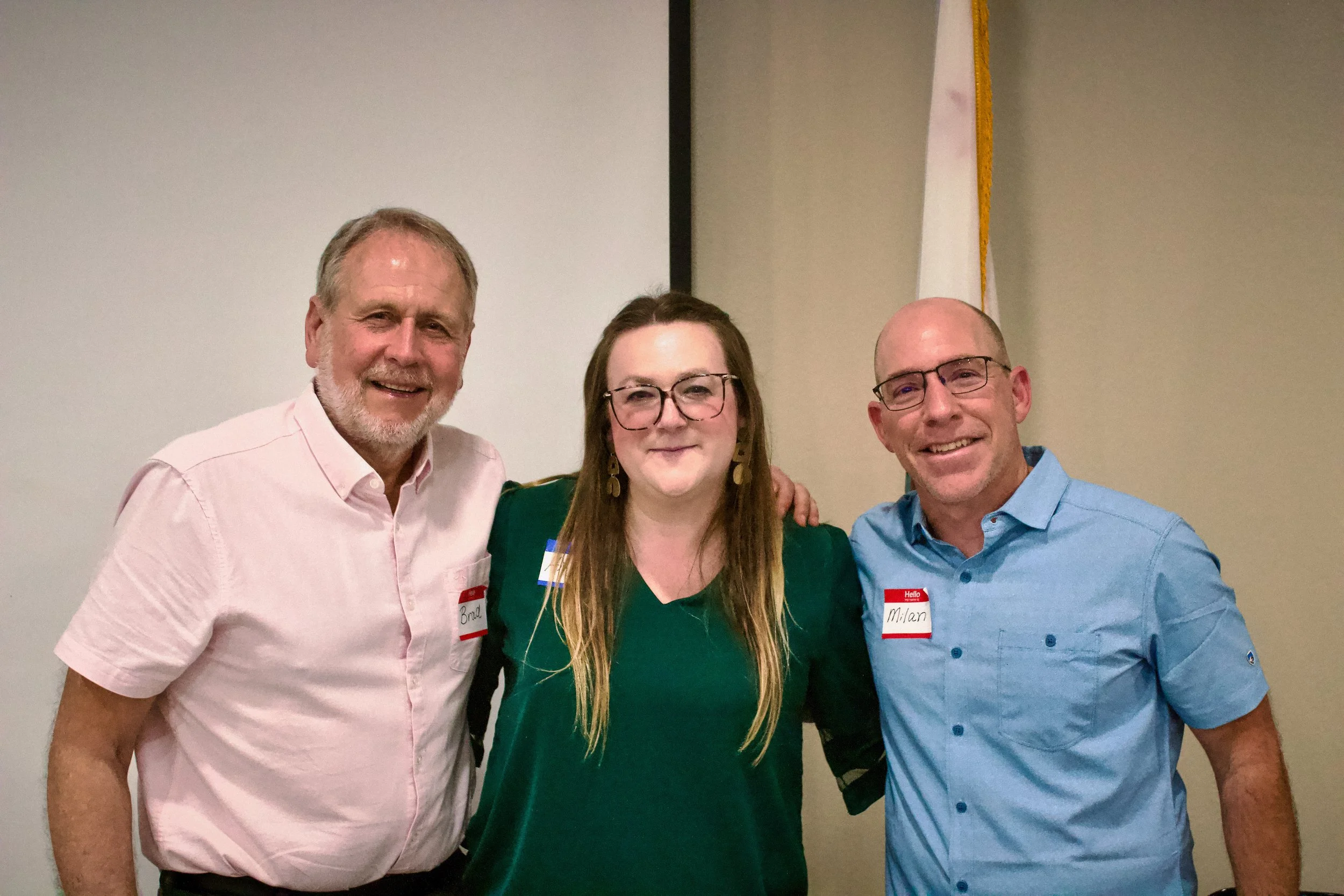
Image courtesy of Eliam Carrion Ramirez: From left to right — Brad Martin, Hillary Jenkins and Milan Mitrovich.
Jenkins asked the panelists for their definition of biodiversity, to which Martin explained that it encompasses three different things, "species richness or the amount of population, species diversity and ecosystem diversity.”
This response led to Jenkins’ next question, “What is an ecosystem cascade or loss of diversity?”
“There are disruptions of ecosystems where a change can cascade down, and lead to additional loss," Mitrovich replied. “You cannot be in the field of conservation without the understanding of loss... The fight we fight, which is conservation, is all about preventing those cascading effects.”
Martin complemented the response, “I like to equate this to the puzzle called Jenga, if you take out one piece of wood, it may still stand, but how many pieces can you take out before it all collapses?”
The next few questions were about important species and notorious ecosystems surrounding Redlands and the Inland Empire. Martin mentioned that over 600 species reside in San Bernardino, 34 of which are federally listed as endangered. Mitrovich highlighted distinct ecosystems, like alluvial fans, which greatly help the biodiversity of the area.
Jenkins then asked, “What is the impact of shifts in our weather and temperature patterns on our local biodiversity? Why would that be a concern?”
“Live oaks are dying because of heat and drought. Teaching in this weather is a weird experience," Martin said. "Flowers are dying. We’re seeing record heat. It is a little disconcerting.”
“We are facing a changing climate. We had climate stability about ten thousand years ago which brought us improvement, evolution and growth, but now we have brought change to that stability,” Mitrovich added. “Heat is almost a certainty, dryness in the soil. We’ll see these heat events in California growing the next ten to fifteen years.”
Jenkins then asked the big question on everyone's minds, "What can all the local community members do to help conserve biodiversity?"
Mitrovich brought up lawns, one of the biggest threats to biodiversity.
“70 percent of water is used in our lawns. You could pull back and see what can happen in your yards. The [local] biodiversity can unfold into our yards," he explained. "I have done it myself, and seen new species show up in my yard which are native to the environment.”
“Think globally, act locally. To me it’s about responsibility, and we can see the changes," Martin replied. "I am observing more and more people being concerned about these issues. Younger people are growing up with better values.”
Jenkins tied up the panel with a final question, “What gives you hope?”
Martin reiterated the changes he is seeing in younger generations, particularly in their values.
Mitrovich added, “It is a moment of change. You being here proves that. Not just climate change, but demographic change, the world is changing. This is the moment, we have to change. I get very happy to hear about certain species showing up in different environments, because it shows that they also have resilience.”
At end of the main panel, a couple tables were allowed to discuss and formulate questions to ask the panelists. After the round of questions, people were informed of other activities organized by ANCA. Attendees shopped at the Sustainable University of Redlands Farm produce stand, that was set up in the hall. A few attendees also stuck around asking questions to the panelists. The event concluded around the scheduled time of 8 p.m.
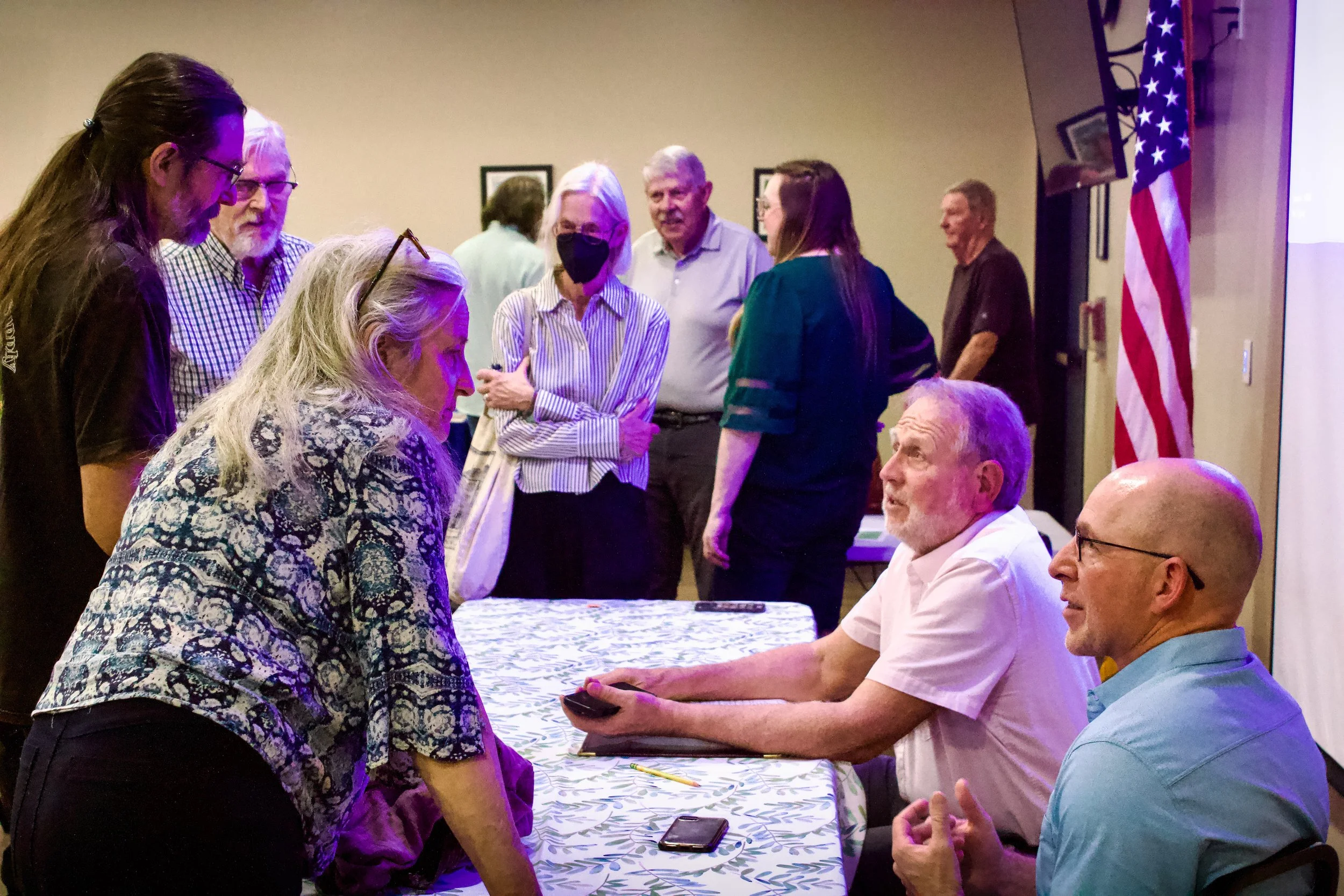
Image courtesy of Eliam Carrion Ramirez: Attendees of event on the left, questioning the panelists from left to right; Hillary Jenkins, Brad Martin and Milan Mitrovich.
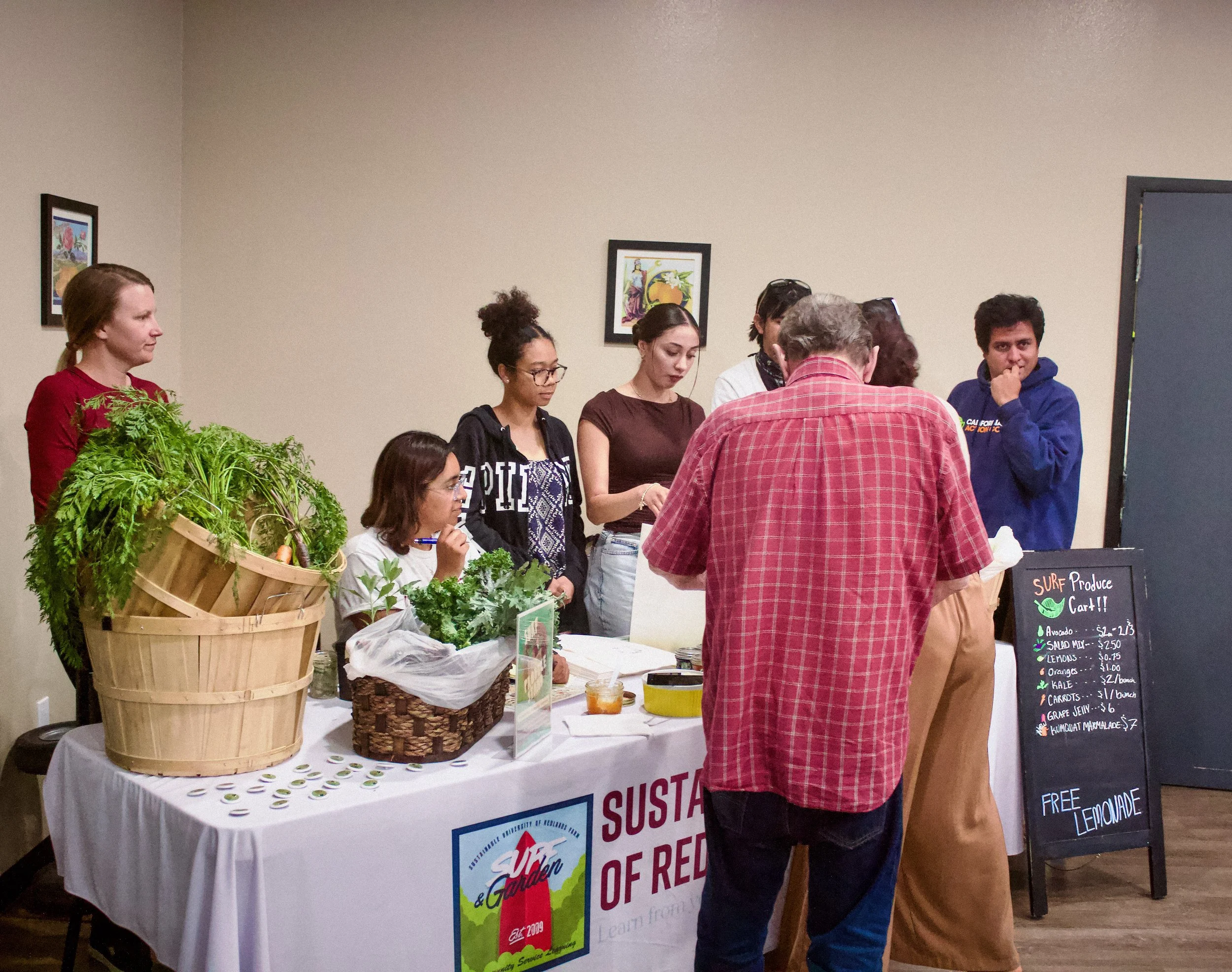
Image courtesy of Eliam Carrion Ramirez: The Sustainable University of Redlands Farm produce stand with working students and attendees buying produce.