
Hostile Terrain ‘94: Desert of the Dead
By Christina Davis
On Feb. 10, Dr. De Leon, author, and Michael Wells, photographer, of The Land of Open Graves (2015), provided a guided walk-through of the Undocumented Migration Project’s (UMP), Hostile Terrain 94' exhibition. This heartbreaking gallery depicts the aftermath of the U.S. Prevention through Deterrence policy, enforced at the borders since 1994. Jason De Leon, UCLA Professor of Anthropology and Executive Director, and Michael Wells, Creative Director and Chair, built the exhibition together with students and members of the UMP, their non-profit organization.
Prevention through Deterrence is a policy that was enacted under the Clinton administration, where excessive law enforcement was issued at common entry points to force migration through the desert, or wilderness. Dehydration and hyperthermia were the anticipated demise for people on their quest for hope. De Leon stated that pioneers of the law hoped this deterrence would not only hinder people from crossing the border, but that it would kill them if they did.
Hostile Terrain '94 was thoughtfully designed to show what this would have looked like. The lives lost in the Sonoran Desert, where De Leon, Wells and the UMP conduct their research, have been reported at almost 4,500 since 1990 (humaneborders.info). Researchers believe the actual number of the dead to be upwards of 10,000.
The walk-through opened with an introduction by De Leon and Wells, detailing the birth of the UMP and Hostile Terrain '94. A son of two immigrants, much of De Leon’s childhood was spent at the borders with his parents. He grew up hearing the tragic stories of the humans around him.
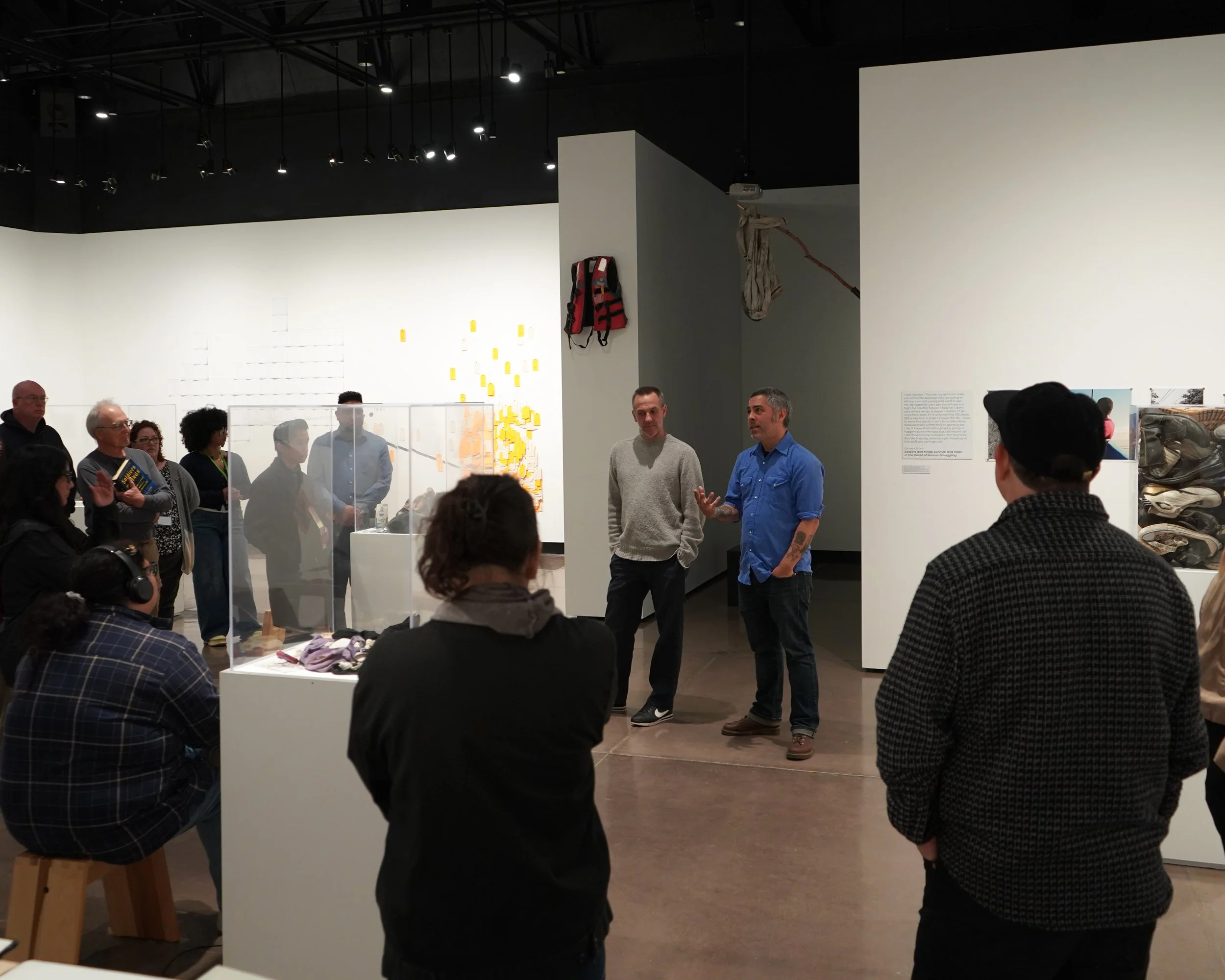
Image courtesy of Christina Davis: Jason De Leon and Michael Wells preface Hostile Terrain 94 to attendees of the exhibit.
Attendees were given De Leon’s point of view in 2016. After The Land of Open Graves brought these stories to light, he describes his past self as frustrated with the people who were still not willing to pay attention to the dead at the hands of the United States’ policy. Deciding that he “would no longer argue with anyone at Thanksgiving over politics.” After the seemingly white flag moment, one of De Leon’s friends suggested that “someone crazy enough” should put together an immersive collection of what was happening at the border.
Making an academic and professional shift from archaeology to anthropology, De Leon’s interest in these stories turned into heavily researching migrants for his professional work. This included Soldiers and Kings (2024), a project that focused on debunking the stereotypes of smugglers and giving a voice to the guides or “coyotes” that help people cross the border.
At the event, De Leon repeated that people are incredibly complex, so the stories they told were oftentimes both funny and dark, with a morally grey element to them. He explained that although many migrants had no plans to become citizens, they were attempting to create opportunities within broken systems that had failed them. Many have lost their lives seeking asylum. Prevention Through Deterrence is a global plan, with Europe following suit and Mexico now implementing the same tactics on their borders to prevent migration from Honduras.
The evidence spoke for itself. The directors’ goal of Hostile Terrain '94 was to hit attendees through multiple mediums with the truth of the devastation caused, in hopes that it would resonate with a greater number of people. It featured audio interviews from migrants and families of lost migrants, copies of documents from the United States on this policy over the years, photographs from disposable cameras (migrants were instructed to take with them on their crossing) and a thoughtful poem to show others what was happening to their fellow human beings, rather than argue the point.
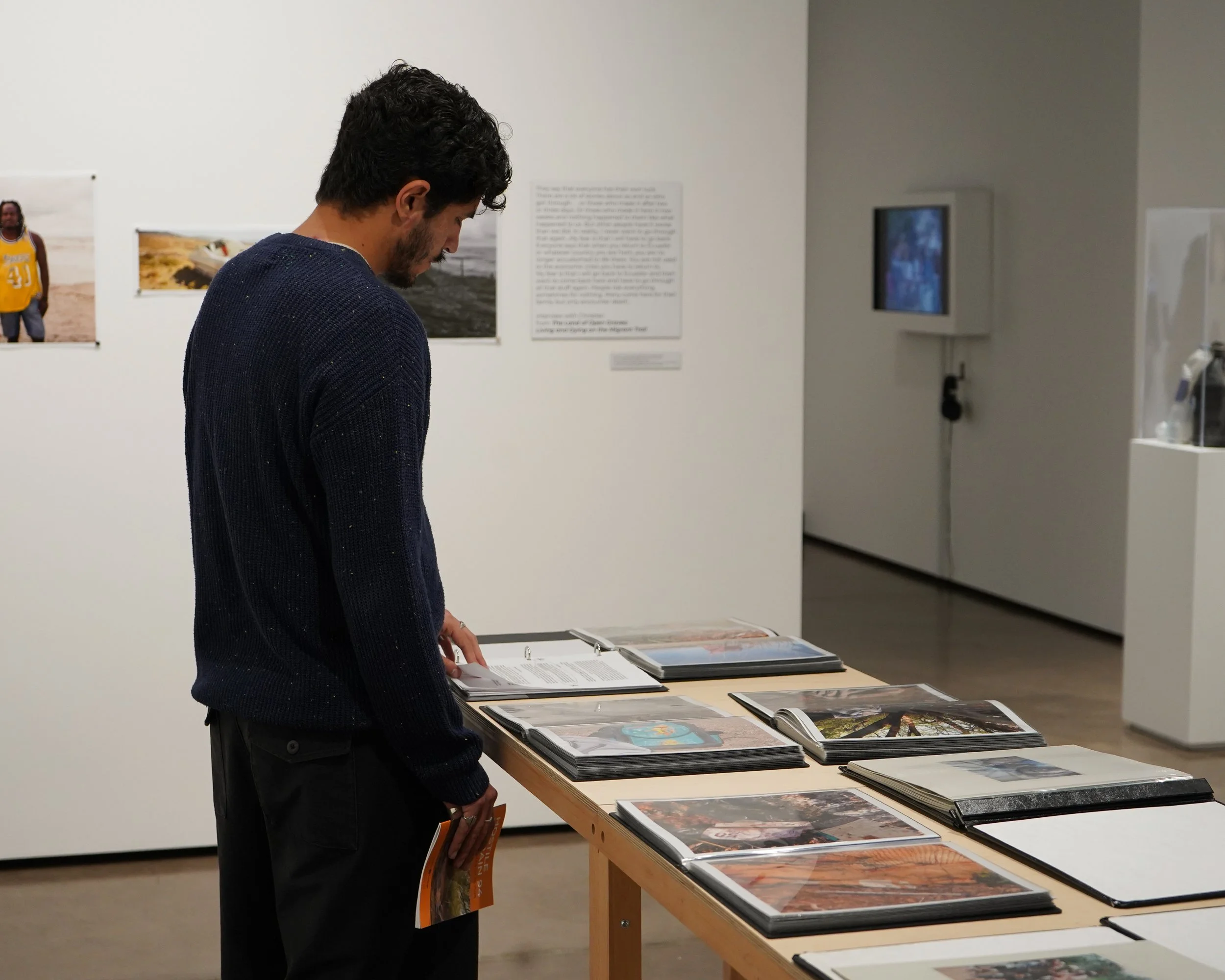
Image courtesy of Strategic Communications: A table displays official United States documents, photos by Wells and disposable camera photos taken by migrants at the border.
Wishing to keep the presentation respectful, the directors humanized the people they researched. They became friends with them and told the community their most hilarious moments while documenting the gruesome reality. Among the artifacts were multiple pairs of worn-out shoes, dirty water bottles, children’s toys and clothing.
The women’s experience is highlighted by wrappers of menstrual products and photographs of items that once made a woman feel beautiful, such as makeup and jewelry. Blood on a woman’s garment being the picture of self-sacrifice for her family.
Jose Tacuri, who went missing in the Arizona desert after telling his father that they would be together soon, looks too young to be a father himself. Along with the open pages that detail his parents’ experience of losing him in The Land of Open Graves, his possessions are clearly those of a teenage boy -- yet his girlfriend was pregnant with a daughter while waiting for him to arrive.
Toe tags of the dead, written by the UMP and students of Dr. De Leon, cover a map of the Arizona border. The plentiful manila-colored tags are those who have been identified; however, an alarming number of orange tags sweeps across the map -- the unidentified dead. Students had an emotional time writing the names and condition of the bodies in the toe tags, and the directors knew that their work was impacting people.
The Feb. 10 event at Chaffey College's Wignall Museum was free and open to the public, with ample time for Q&A, book signing and community building through refreshments and music in the art patio. Chaffey students received a free hardcover copy of Soldiers and Kings, and attendees purchased The Land of Open Gravesat a discount. For students and community members who would still like to hold space for the lives affected, the exhibit is open until March 14.
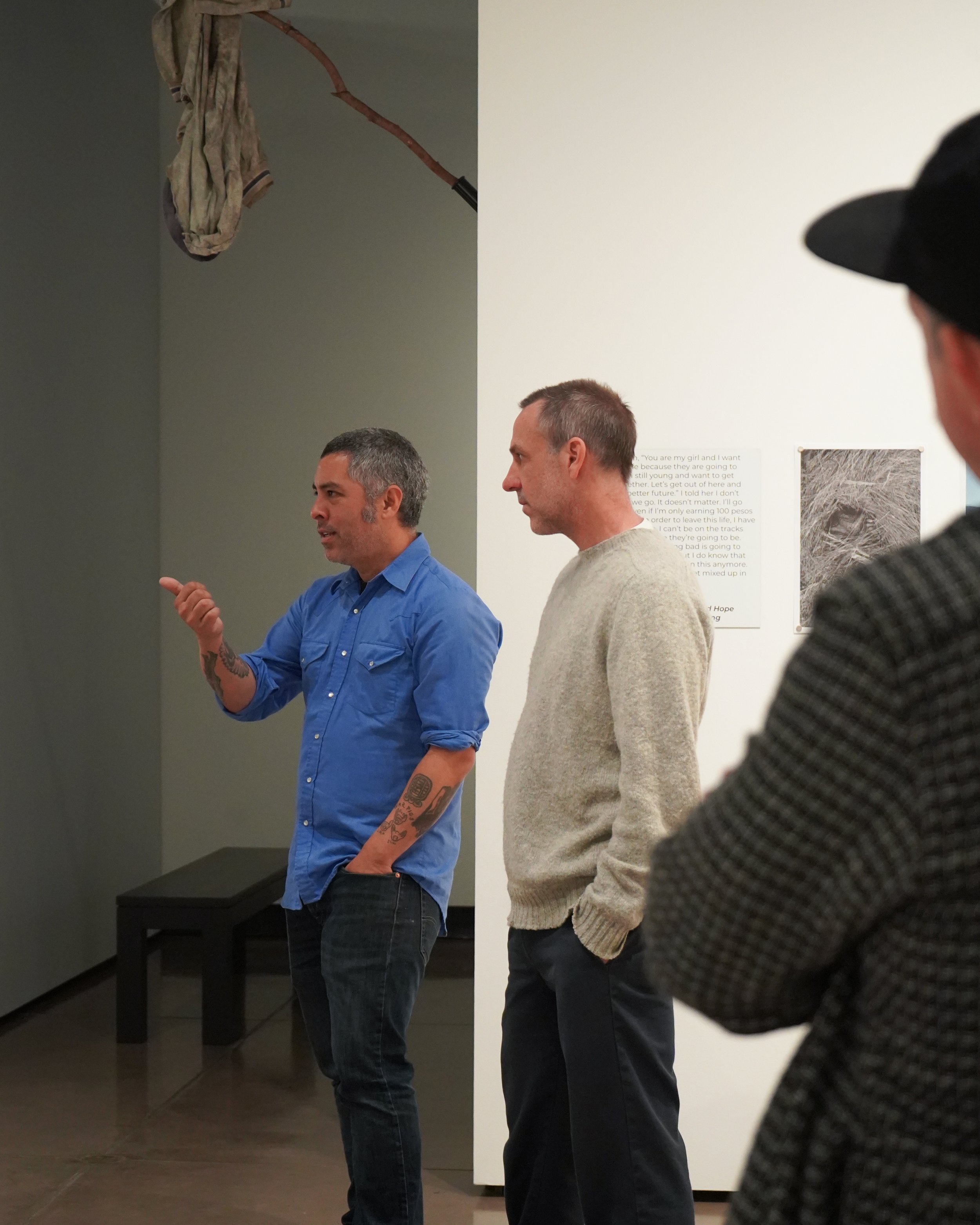
Image courtesy of Strategic Communications: De Leon and Wells answer attendees' questions at the end of the walk through of their event.
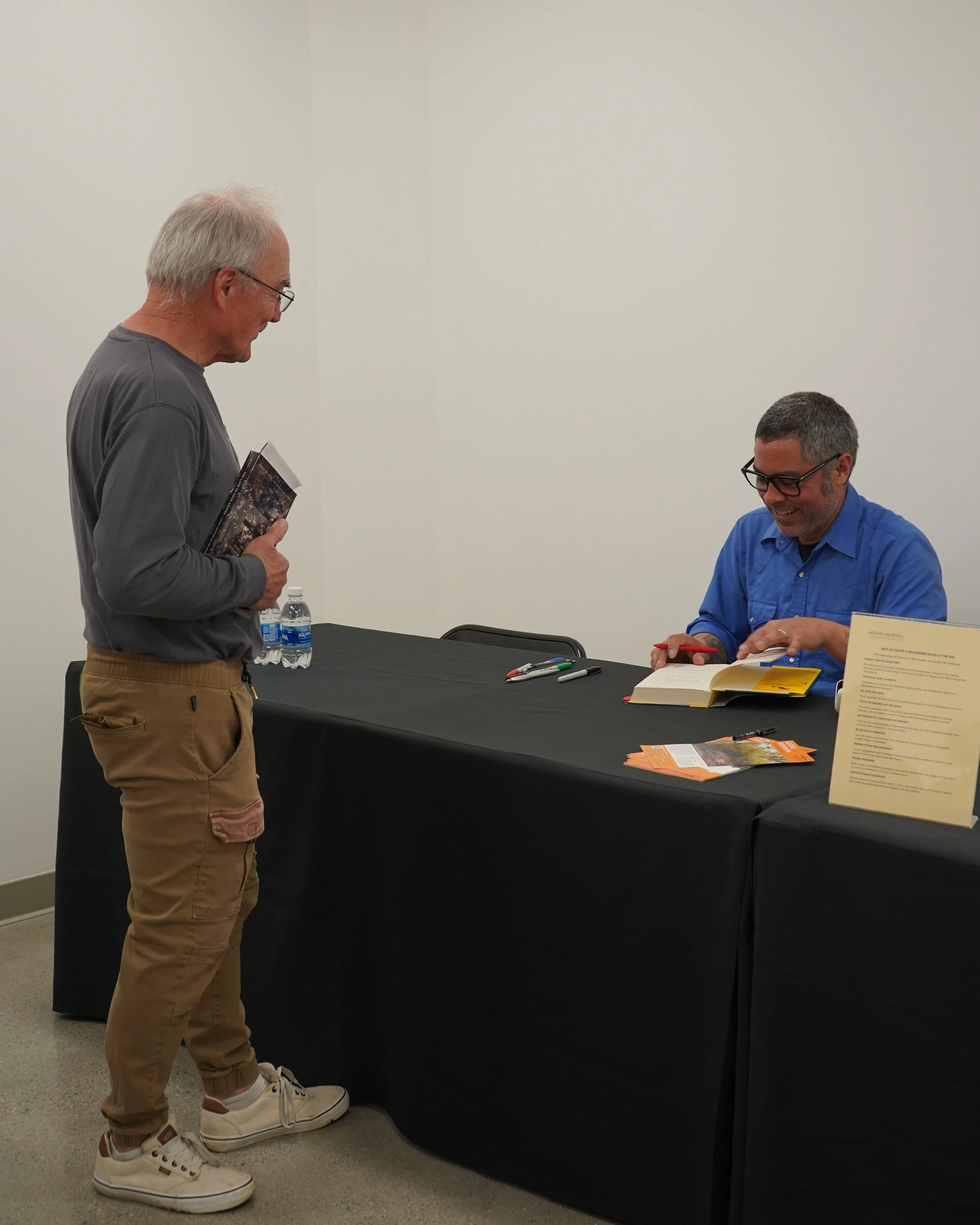
Image courtesy of Strategic Communications: De Leon signs his new book, Soldiers and Kings, for an attendee.
“My hope is that students start conversation. The more people are shown things they might not know about, the more they can talk about it and become involved in something like this,” said Dr. De Leon. Students can get in touch with UMP and volunteer to write toe tags for future projects.
Michael Wells added that Chaffey students “are in the perfect learning environment to create something like Hostile Terrain 94 or do it even better."