
Zines, Comics and Community
By Loureyna Pablo
Nestled within the trees and unassuming gray buildings of Chaffey’s Rancho campus, the Wignall Museum’s vibrant Zomics: Festival of Zines and Comics returned for its seventh year.
On Wednesday, April 29th, members of the local Southern California art community gathered at the Wignall’s patio to share their art at Chaffey.
The patio transformed from an empty concrete lot to an art market vivid with engagement and connection. Laughter, excited gasps and insightful conversations filled the air, with many vendors citing the cozy community feeling as the highlight of the event. Artists traded with artists, and attendees bonded over shared interests and exploring the world of zines.
Zines are noncommercial magazines that allow anyone to self-publish their work. Sometimes made by hand, typed, photocopied or a combination of methods, this method of publication allows any person or group to distribute their thoughts or art in small batches.
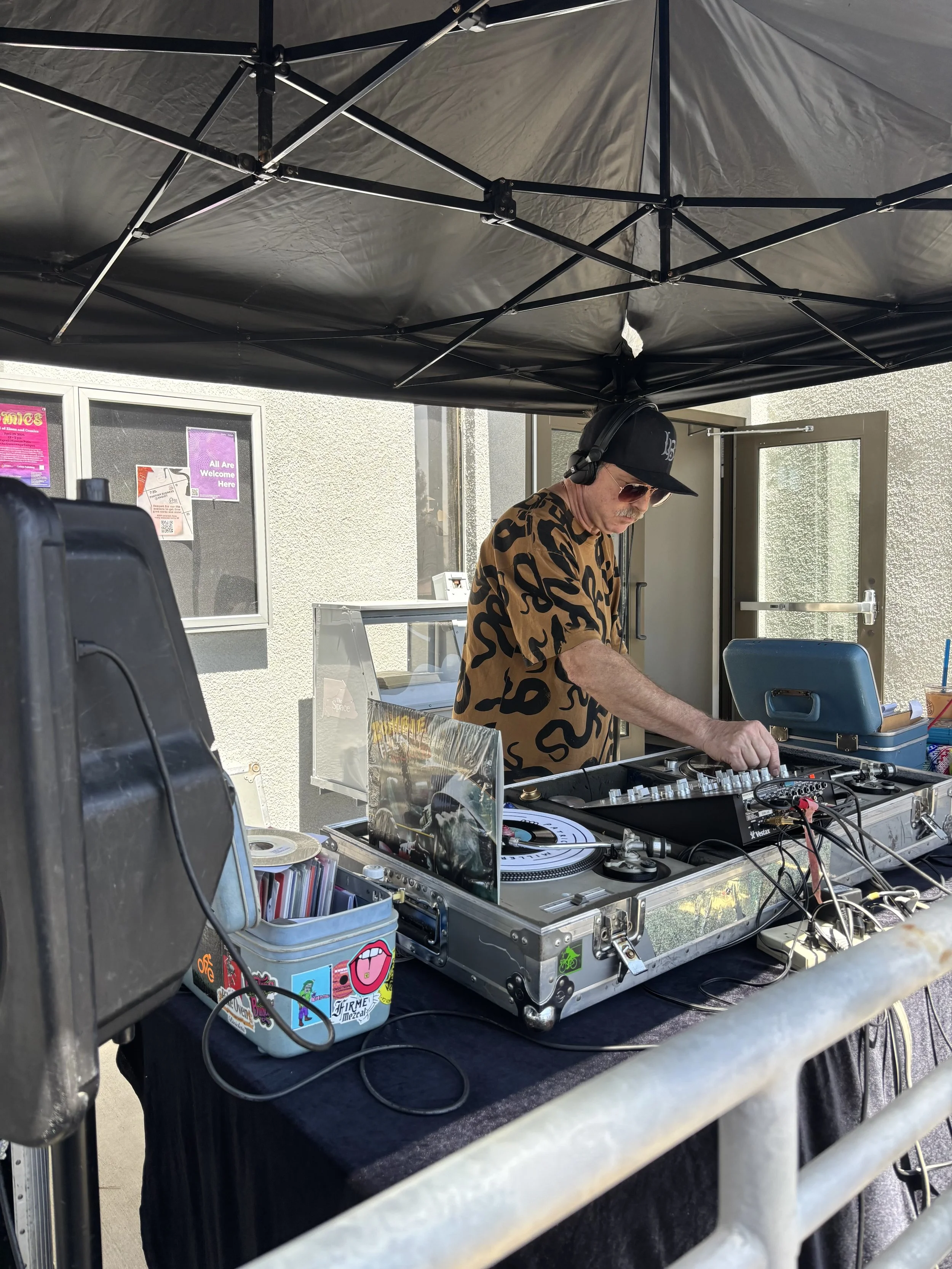
Image courtesy of Nizar Masri: Live DJ accompanying the buzz of the festival.
With free refreshments and live music by DJ "Otro" Patrick Miller, members of Chaffey and the public enjoyed a sunny day whilst browsing. From nostalgic comic book character art to creepy-cute zines about dolls, the diverse array of over 40 artists catered to different topics of interest.
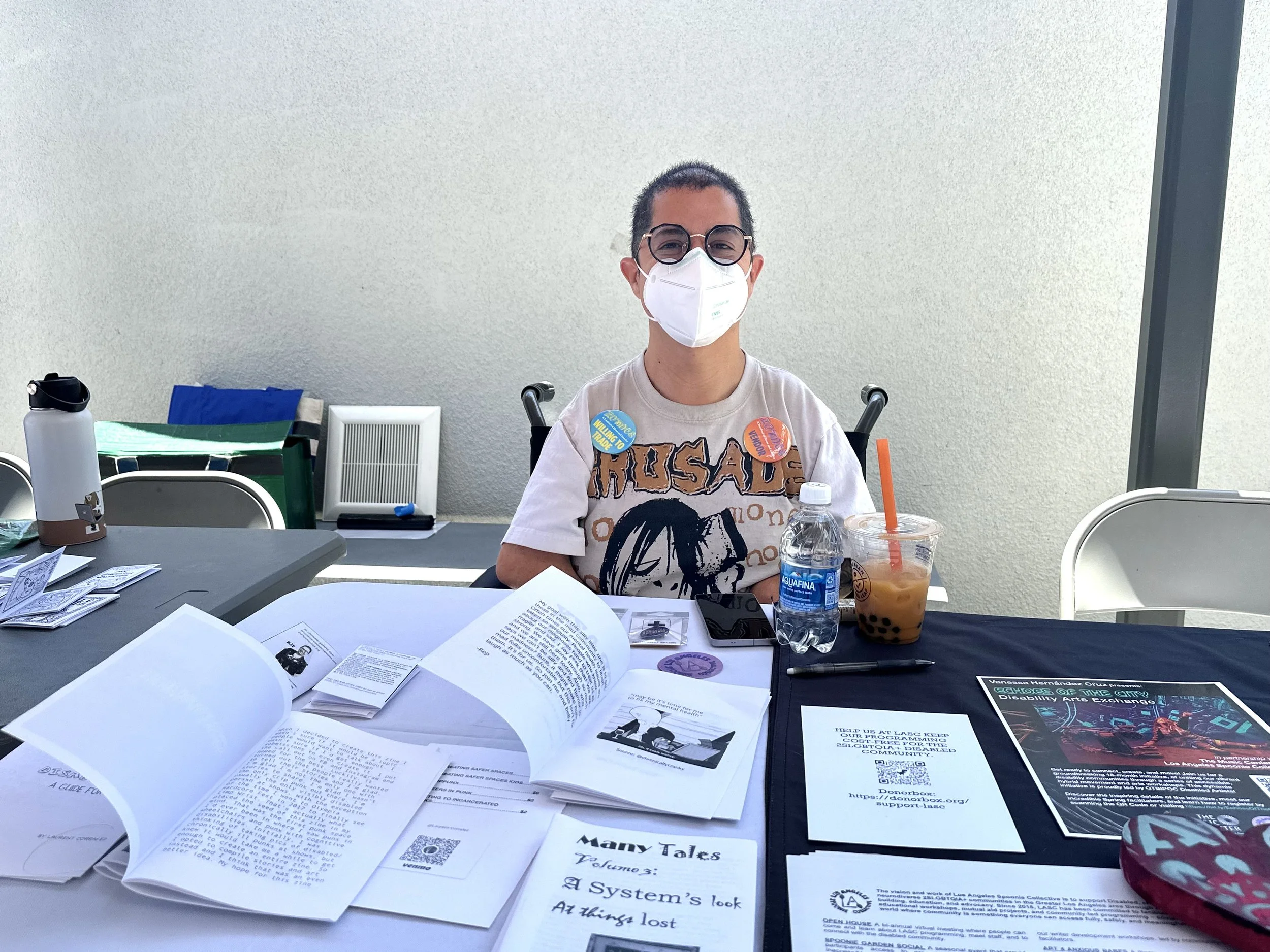
Image courtesy of Dorothy Vazquez: Laurent Corralez vending zines for the Los Angeles Spoonie Collective.
Vendors like Laurent Corralez also appreciated the festival because of the accessibility to information that zines provide. The Los Angeles Spoonie Collective, which Corralez represented at the Zomics event, is a group of LGBTQ+, disabled and neurodivergent people that work to represent and uplift their communities’ voices. Their table included zines on how to create safe spaces and on finding laughter and joy despite mental health struggles.
“[Zines] document information about communities that kind of get left behind in mass media,” said Corralez. “We can kind of take control of our narrative and discuss information and topics that are not really touched upon.”
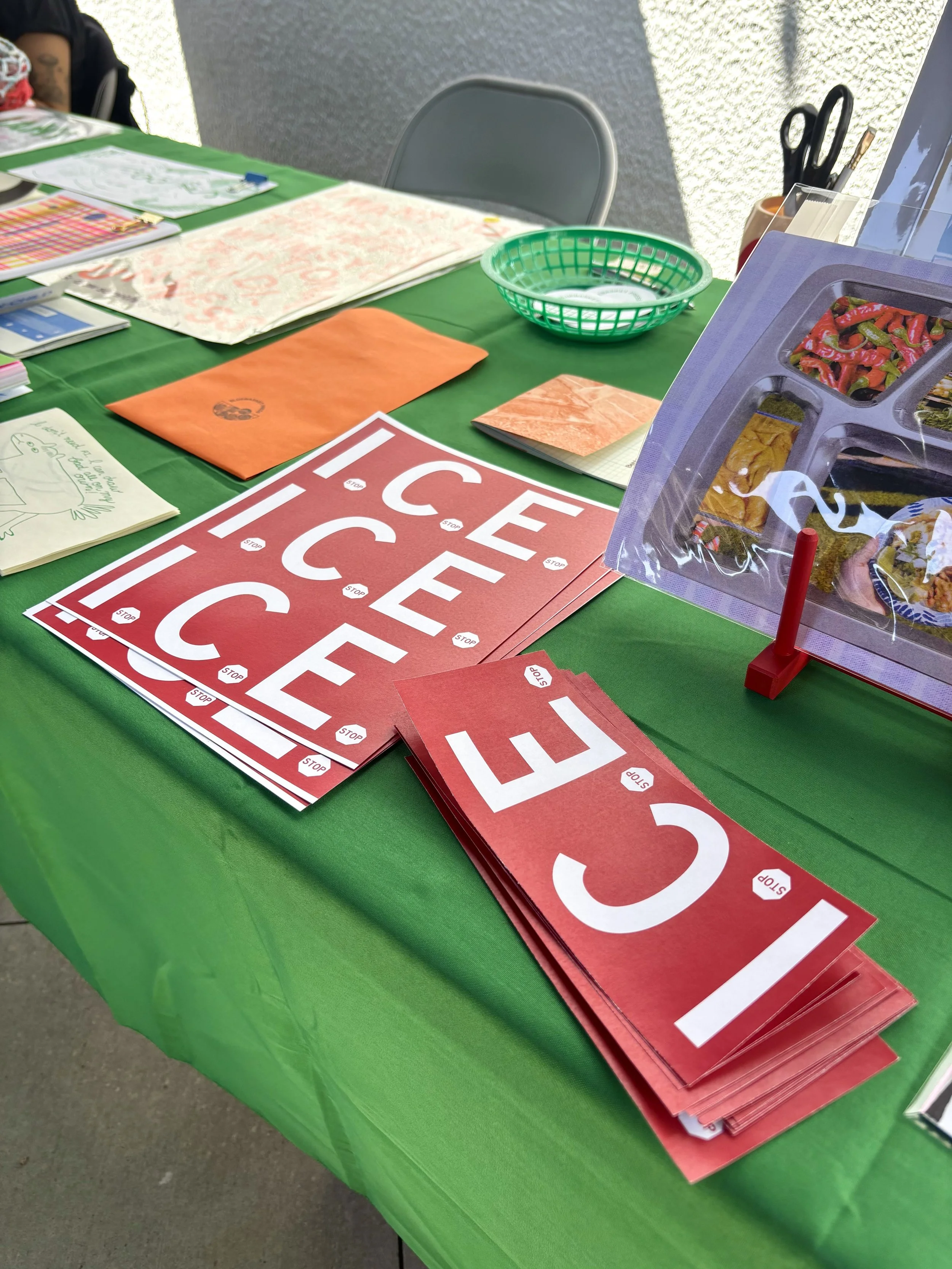
Image by Loureyna Pablo: Stop ICE stickers provided for free by Blue Basket Press, created by DJ "Otro" Patrick Miller.
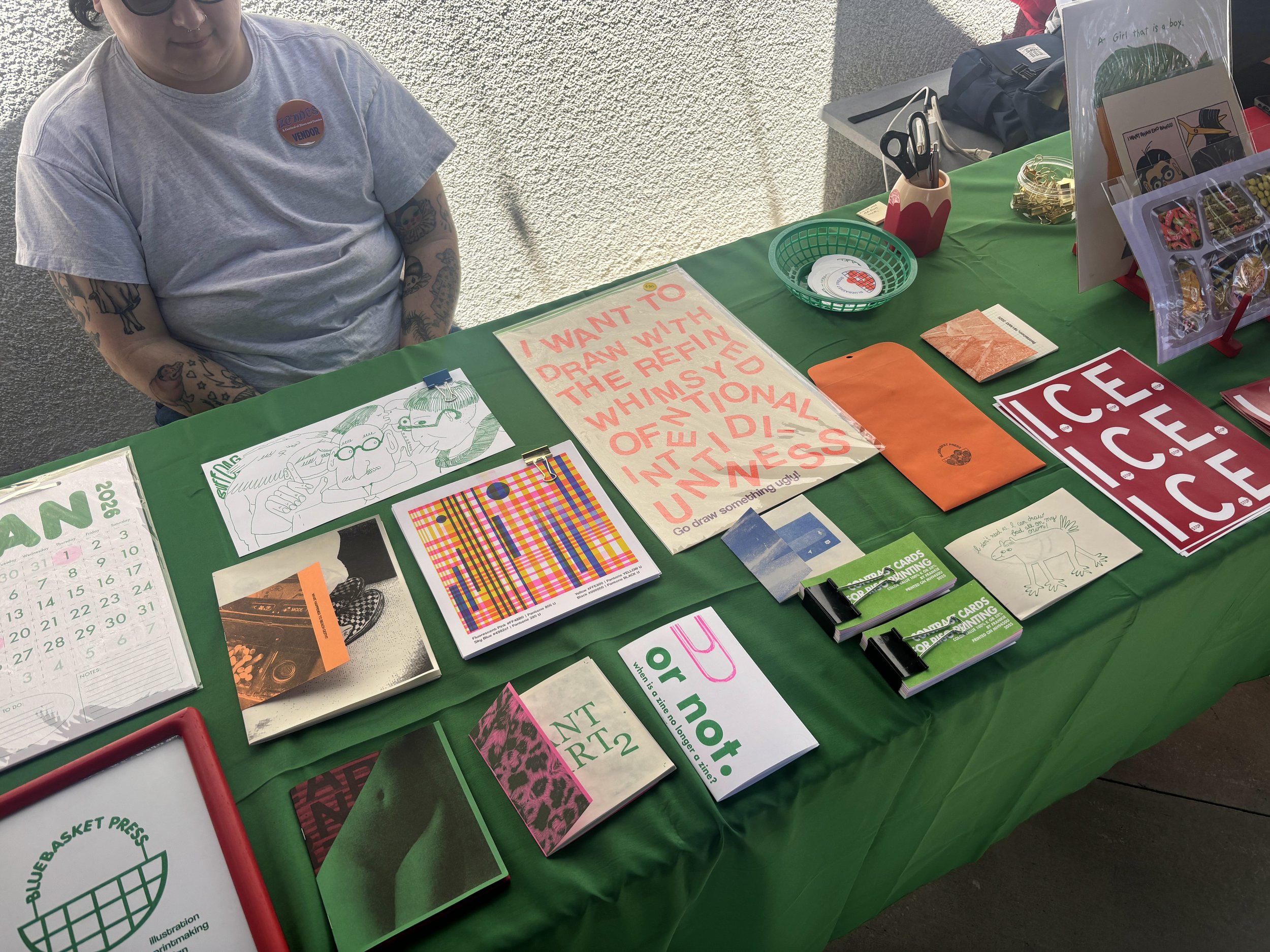
Image courtesy of Loureyna Pablo: The assortment of Blue Basket Press risograph prints and zines.
Besides zines, artists like Frankie Gutierrez of Blue Basket Press brought their other crafts — for Gutierrez, that was artwork from their risograph garage studio in Fontana. Using what is essentially a screen printing photocopier, Gutierrez creates color fun prints for zines, stationery and projects for businesses. With 15 years of vending experience, he hopes that other attendees can leave with an urge to “get a little crafty,” and the realization that zines (and art) can be made and shared in any way.
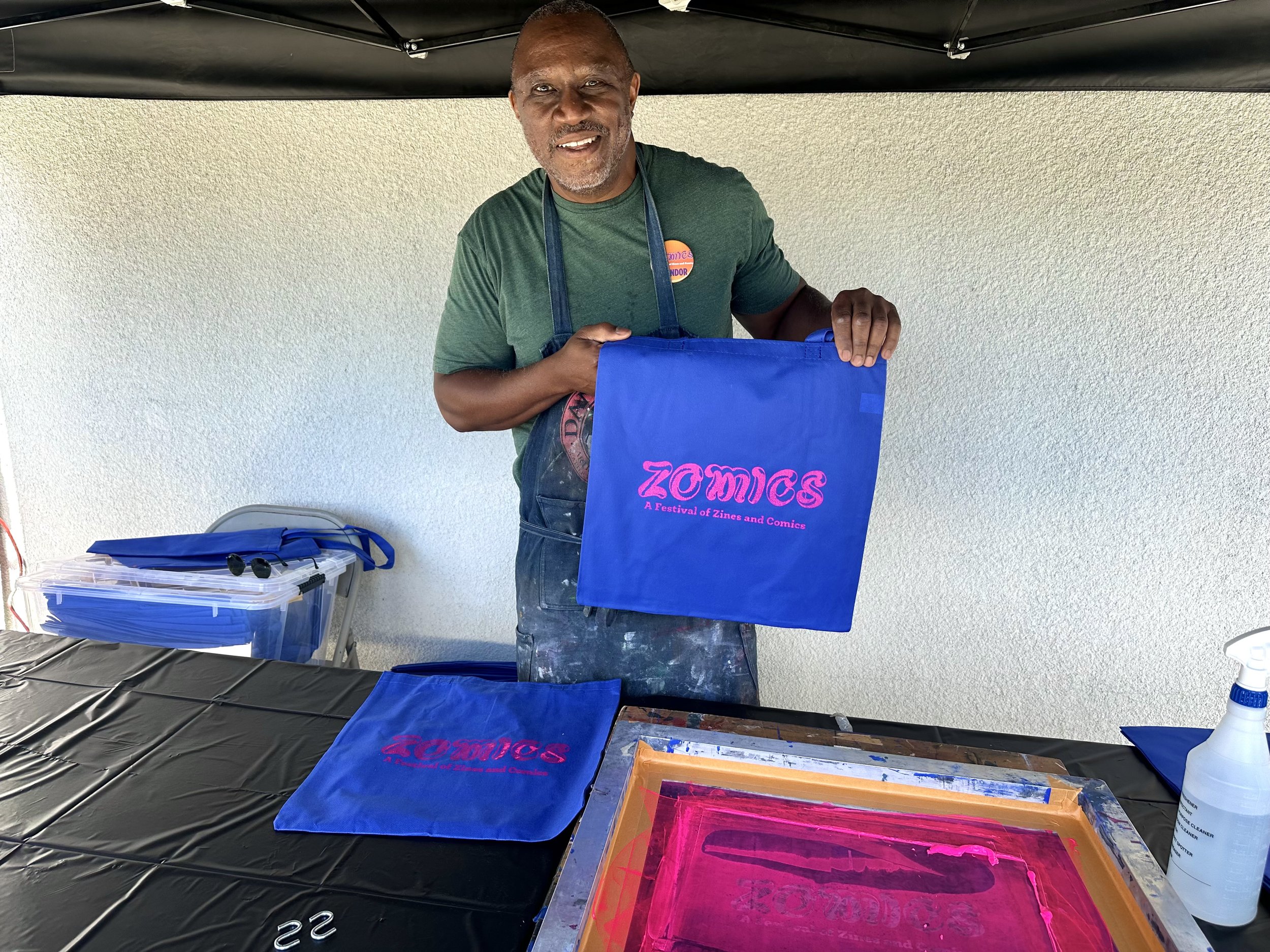
Image courtesy of Dorothy Vazquez: Duane Kellum screen printing souvenirs of the Zomics fest.
Those hopes were realized at the festival. Passersby became participants who became artists. Some students expressed that they were unaware of this event prior, yet left with buttons they handcrafted (materials provided by Chaffey College Library). Others took home prints, zines, stickers, linocut temporary tattoos and tote bags (live screen printed by Zomics event regular, Duane Kellum).
“Oftentimes, people on the outside do not realize what great beautiful work is being done on community college campuses,” Kellum shared.
The festival was held as the main event of a greater program. Throughout the entire semester, members of Chaffey had the chance to attend artist-led workshops, ranging from experimental bookbinding to collage button making.
According to museum director and Zomics organizer Rebecca Trawick, this year’s largest festival program was thanks to their newer partnerships with the Arts Area and Curious Publishing. Additionally, the program was funded by a portion of the grant they recently received from California Humanities, a nonprofit partner of the National Endowment for the Humanities.
“We hope participants leave with a stronger understanding of zines and comics — and the confidence to start making their own,” Rebecca shared. “Beyond that, we encourage them to stay engaged: attend future zine festivals and workshops, support local artists and small businesses and help sustain a vibrant, creative community.”