
Art Fundamentals: Featuring Fred Stodder
by Kiya McClenton
Fred Stodder is a professional artist and sculptor from Southern California. After attending the grand opening of the gallery Claiborne & Co. back in August, I had the pleasure of interviewing Stodder, where he shared his experience in the art community as well as his thoughts on how art has changed within recent years.
KM: You previously mentioned your education in the arts. What were some of the biggest tips you learned over the years that you’d share with aspiring artists?
Stodder: I think looking at all kinds of different arts and mediums to get a universal idea of what can be art is helpful when applied to your chosen medium. That way you can be a little more original and stand out from those that follow more traditional processes. Specifically in ceramics, people tend to fall into the traditional methods, like pottery, which leads to minimal creativity because there’s so much work in that area that’s already been done.
KM: With decades of experience under your belt, what are the biggest changes you’ve seen within the art industry over the years?
Stodder: When I started off in art school, different movements in art had been occurring and taking place for centuries, like impressionism in the early 20th century or conceptual art developed in the late 60s/early 70s. After that, art kind of “rehatched” and started to look backwards, so there aren’t really too many ideas that haven’t already been thought of. It’s sort of happening with all forms of art, like music. Conceptually, these forms of art have all come from methods that have been used before. Completely new concepts are really rare, and I don’t think we’ve had the growth that we did back in the past. For instance, from World War II to the late 60s, that was the American Renaissance for all forms of art as so many new concepts were introduced.
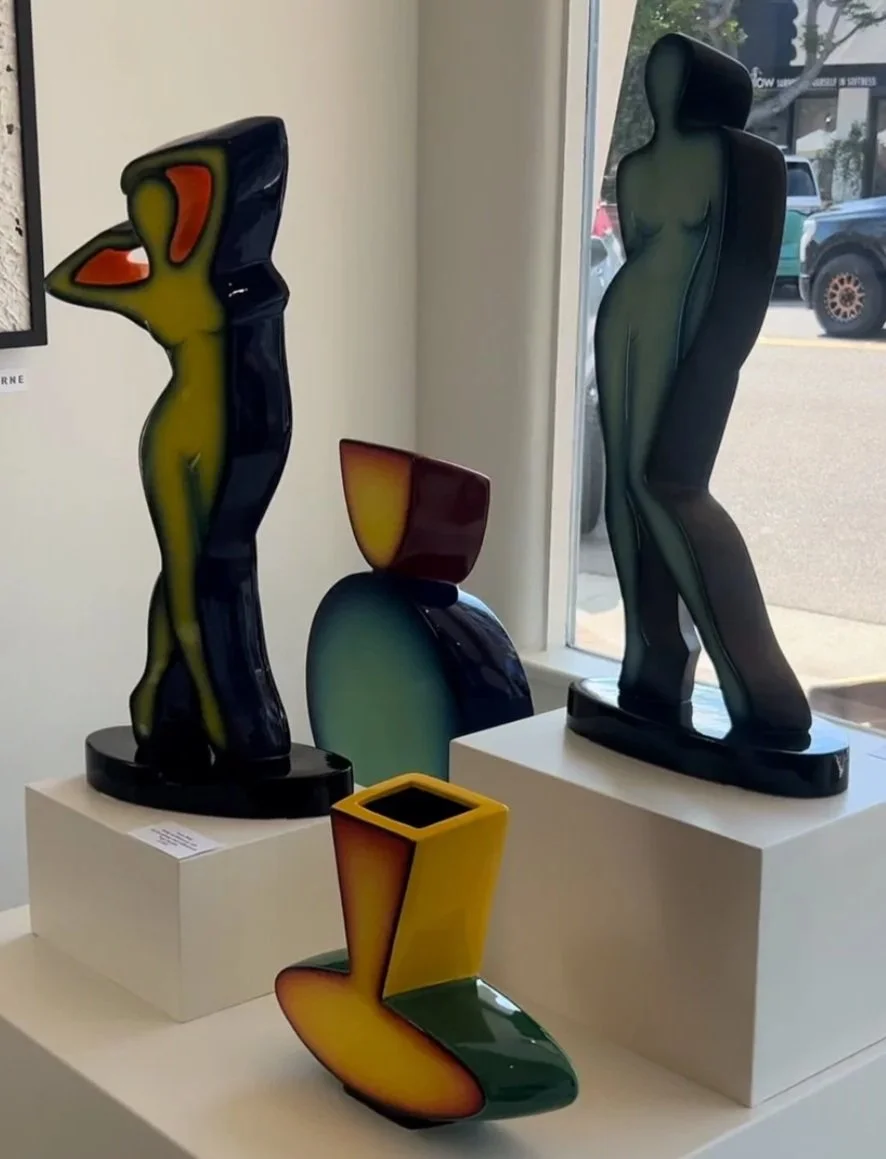
(Photo by Kiya McClenton)
KM: How do you think artificial intelligence will influence the art industry in the years to come?
Stodder: I think it could interfere or add to commercial and graphic art, but as far as creative art, that’s in another category. It could utilize AI, but there still has to be a human behind it making choices and decisions on certain creative aspects. Art solely developed by AI are not really paintings; it’s just a digital representation of an image. It’s slightly less than a photograph of a painting. In other words, maybe it’ll get to the level of a photograph of a painting, but that’s a long way from a real painting. And it’s not a cheap process, especially on a larger scale.
Physical art is a lot harder than digital art. 95% of my work is done physically with my own hands for hours, but I do use my computer for developing designs, which I digitally upload to an iPad. With this, I can clean up and stretch the design to what I desire. When you make a loose drawing and then clean it up, it creates more of a design that you can work from and make quicker changes.
It isn’t like you can’t make an interesting image with AI. But I think that artists need to go toward physical mediums more while using AI as a tool for support and to save time in the developmental process. Because there are many dishonest and corrupt people who use this tool, there will always be reasons for people to have complaints about AI. But somehow, you have to work around it and take advantage of it if it falls in line with what you’re doing at all.
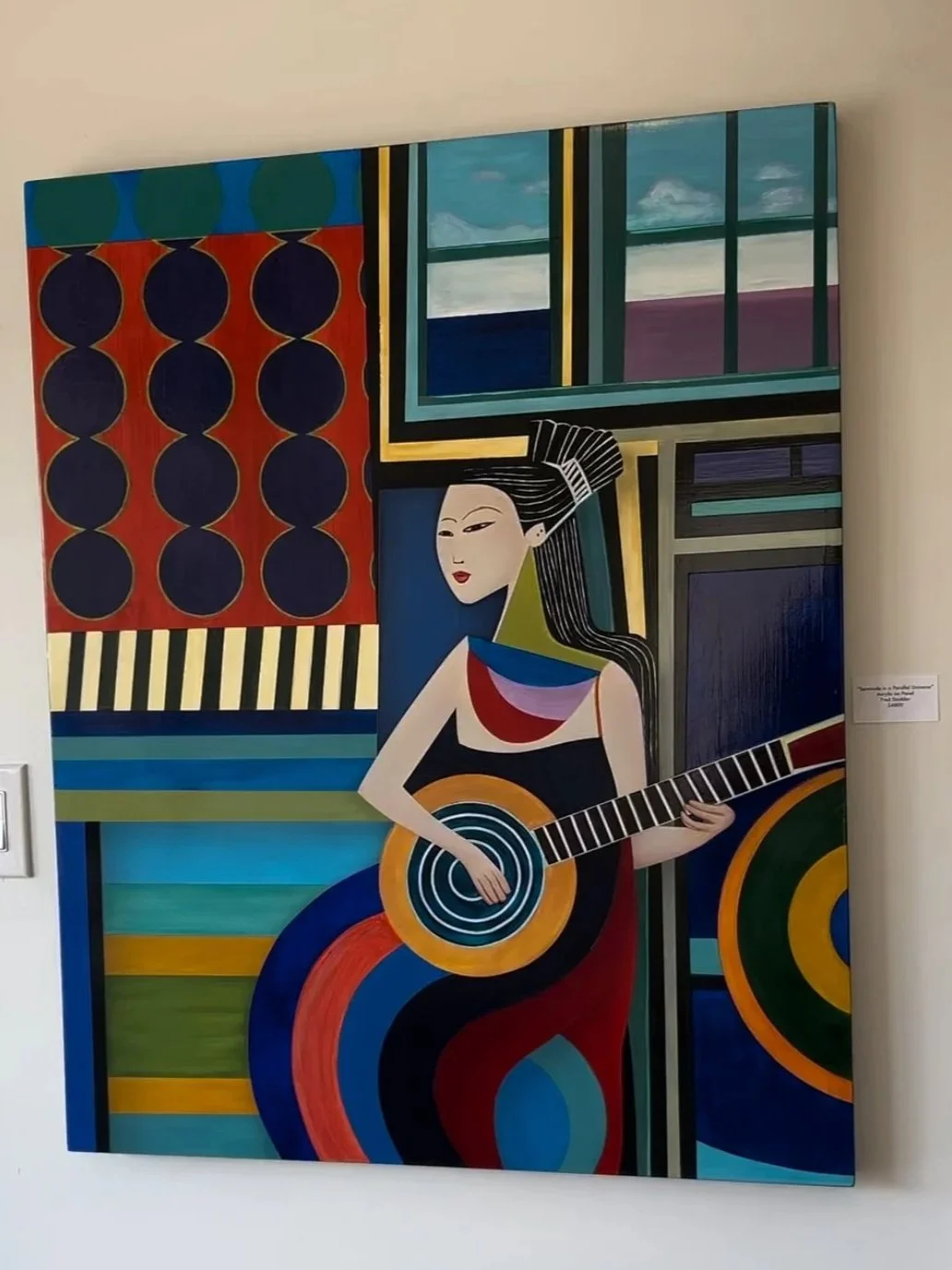
(Photo by Kiya McClenton)
KM: How do you want your artwork to impact your audience? Is there a particular message you want to express through your work?
Stodder: A lot of people say that my art is very unique, and it makes me feel good. That’s about as good as I could hope for really. I like making people feel good inside by adding to their perception through seeing something in a way they haven’t seen before. I try to keep my art tasteful, but not in a conservative way. Many artists and designers get so hung up in what they think is good taste, the work becomes very bland or just fits inside a certain conception of the medium they follow. For me, it’s not a matter of good art and bad art; it’s a matter of the work standing out within any style or medium.
KM: Thank you so much for taking the time for this interview Fred!